
Finding Chesapeake Residents by Record
A useful Chesapeake residents directory search starts by matching the question to the record. An address points first to the parcel layer. A name tied to a court matter calls for the court index. A past family is better served by a directory volume, newspaper, census, or probate file. No single list contains every Chesapeake household. Property records name owners, recorded instruments name parties, and historical directories capture only the people a publisher chose to print.
Use each result as one piece of evidence. A property owner may receive tax mail elsewhere. A deed party may be a trustee or estate. A court hit can belong to a different person with the same name. The most reliable Chesapeake residents directory trail has two independent matches, such as a parcel and a deed reference, or an old directory entry and a census or obituary.
- Open the City property service when the starting point is a street address or parcel.
- Save the owner, situs address, map parcel, transfer clue, and deed reference shown in the record.
- Check the Clerk index or the Virginia court path for a dated, named record.
- For an older household, search the local-history shelves and predecessor place names.
- Ask the custodian for the lawful counter, copy, or records-request route when the web result stops.
Chesapeake Residents Directory Custodians
Chesapeake is an independent city, so its Circuit Court Clerk fills the land-record role often handled by a county recorder. The City Real Estate Assessor and GIS locate present parcels. The General Registrar handles election records. These offices keep different kinds of evidence, and each can confirm only what its own record actually says. The address-by-address method belongs on the Chesapeake street directory page.
Chesapeake Circuit Court Clerk
307 Albemarle Drive, Suite 300A
Chesapeake, VA 23322
757-382-3000
Chesapeake Real Estate Assessor
Property assessment questions
Chesapeake, VA
757-382-6235
Certified instruments and court copies come from the Clerk, not from a map popup. The registrar can explain a permitted inspection route, while the online voter tool is designed for a voter to verify that voter’s own status.
Chesapeake Parcel Records for Residents
The City’s Real Estate Property Information service and GIS are strong opening tools when a name or address is linked to land. The public parcel layer distinguishes the physical situs from the tax mailing address. It also publishes a ZIP, legal description, transfer date, deed book and page, assessment components, map references, and owner field. A mailing address helps identify where an owner receives correspondence. It does not prove that the owner lives there.
| Parcel result field | Why it helps |
|---|---|
| Full Address | Identifies the parcel’s physical situs. |
| Owner and mailing fields | Names the assessment party and correspondence destination. |
| Map Parcel and legal description | Bridges a map result to older title records. |
| Deed Book and Deed Page | Supplies a cross-check for the Clerk index. |
| Transfer and consideration | Places an ownership entry in time, when the field is present. |
Parcel lines are not a survey or a title opinion. They are a map and assessment aid. The Clerk’s recorded instrument is the next stop for a title question.
Chesapeake Clerk Records Through Time
The Virginia Secure Remote Access gateway connects researchers to Chesapeake Clerk land indexes. The Clerk reports deed indexing and imaging from 1637 to current, will indexing and imaging from 1755, plats from 1879, judgments from 1987, and financing-statement indexes from 1998. That depth makes a recorded party name a useful trail for estate work, historic title research, or confirming a dated transfer.
Online access has layers. Chesapeake describes paid remote document access, while the statewide instructions note that a clerk may enable free index-only searching. The public counter remains an option at 307 Albemarle Drive. The Clerk lists copies at $0.50 per page and certification at $2. For records before Chesapeake formed, search Norfolk County and South Norfolk as well. A clean Chesapeake search does not erase a predecessor record.
The Clerk’s records page is shown below. It is a practical reminder that an index result and an authorized document image are different levels of access.
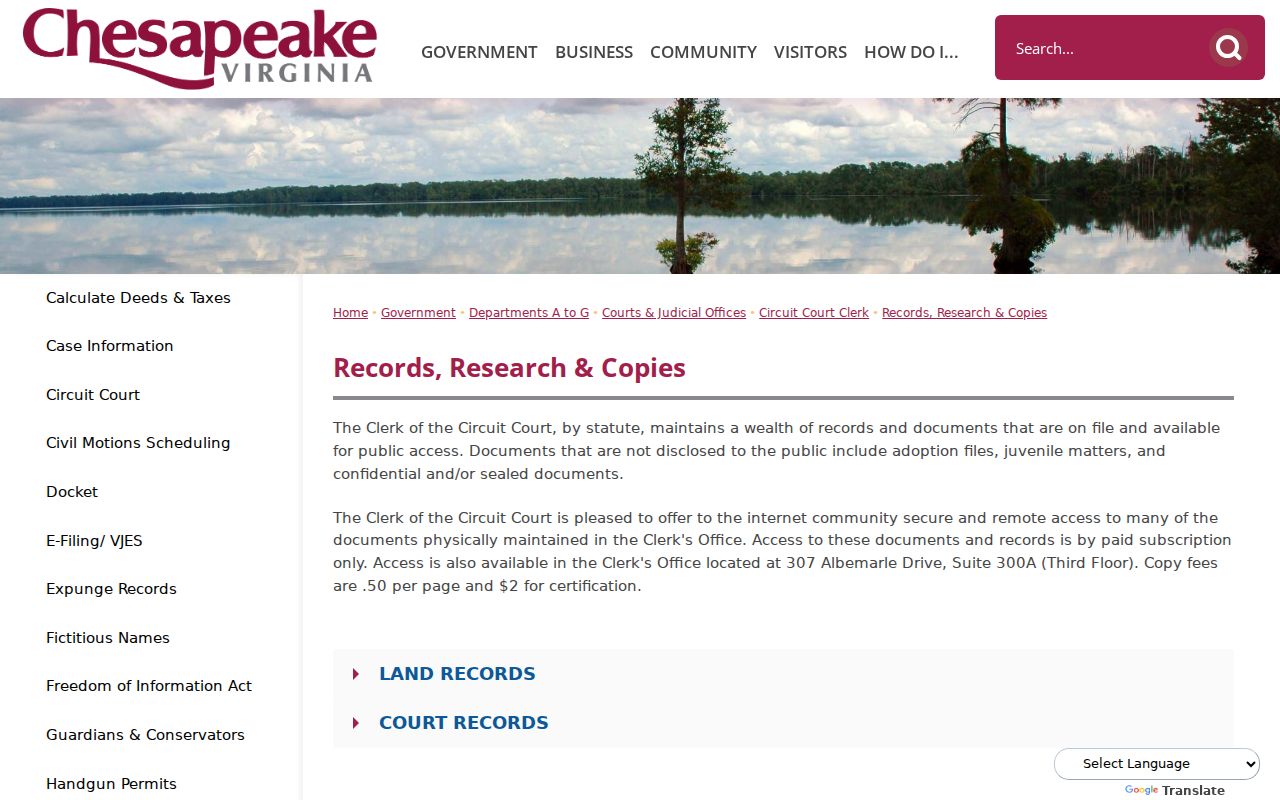
Use the coverage and copy information to choose between a remote search, a counter visit, and a request for a certified copy.
Chesapeake Voter Record Boundaries
The Virginia Citizen Portal is a self-service status tool, not a broad Chesapeake residents directory. It asks for first name, last name, date of birth, the last four Social Security digits, locality, and a certification. A voter can see registration status, polling place, districts, absentee status, and voting history as the system permits. Ballot choices are never part of the record.
| Route | What it can answer | Limit |
|---|---|---|
| Citizen Portal | A voter’s own registration and precinct information | Private identity inputs are required. |
| Registrar inspection | Statutorily permitted name, address, birth-year, gender, and district fields | Protected fields and addresses remain excluded. |
| Written list request | Only the uses and recipients set by Virginia Code §24.2-405 | It is not a general public download. |
The screenshot below shows the state entry point. A missing self-lookup result calls for the Chesapeake General Registrar, not a guess about a person’s address.
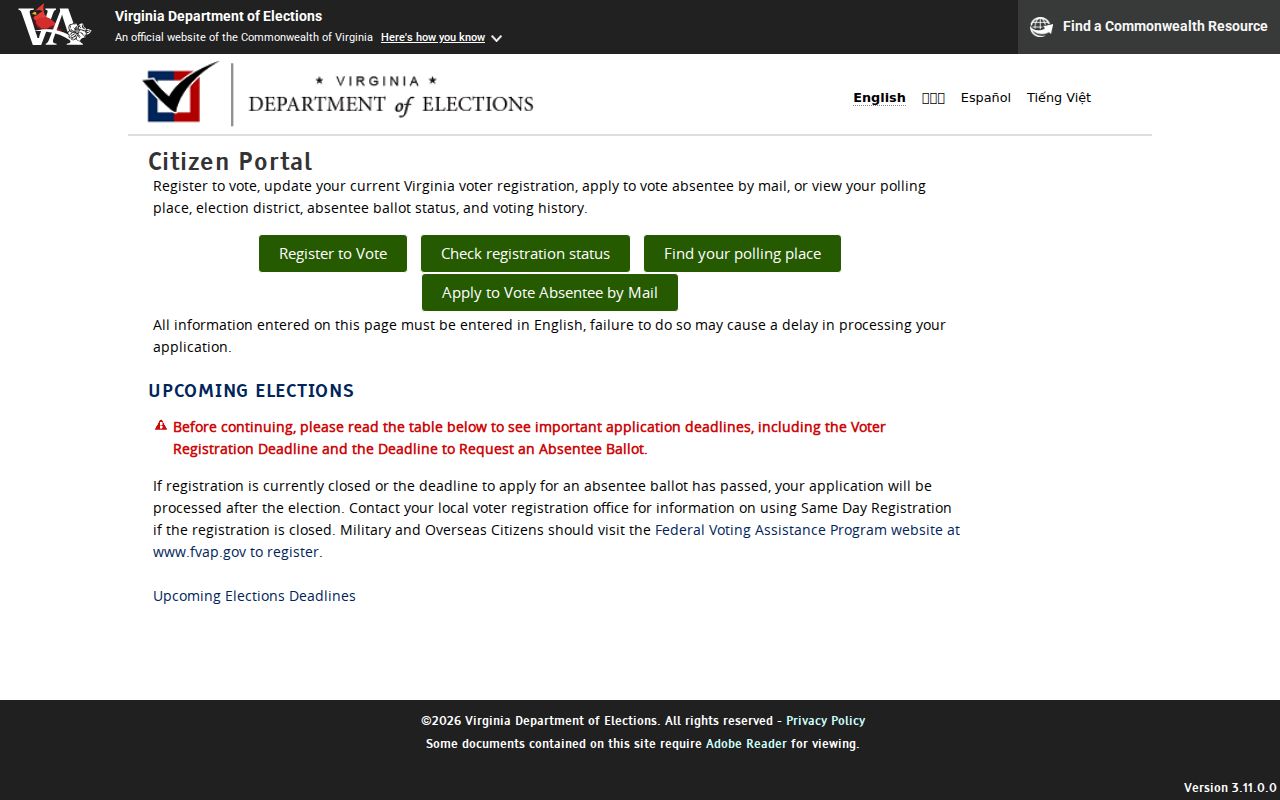
Virginia law excludes Social Security details, day and month of birth, and certain protected address information from the public side of voter records.
Current Chesapeake Residents Directory Sources
Current directory-like sources do not cover the same people. The property layer is about parcels and owners. Recorded land records identify parties to instruments. The City staff directory lists public offices, not private residents. Civic leagues can point to a community contact, but their membership is not presumed public. Choose the source that fits the question, then compare its date and limits with a second source.
| Chesapeake source | What it identifies | Access route |
|---|---|---|
| Property/GIS record | Parcel owner, situs, mailing, and deed reference | City property service and public GIS |
| Clerk land index | Grantors, grantees, instruments, and legal descriptions | SRA or Clerk counter |
| Virginia court system | Indexed parties, case data, and status where public | Online path and court clerk |
| City staff directory | Named City officeholders and department contacts | City directory |
| Civic League Directory | Community organization contacts | City Civic Leagues |
When the task is to confirm one person rather than understand a record set, the Chesapeake resident lookup workflow keeps the name, date, and address checks separate.
Chesapeake Court Names and Dates
The Virginia Judiciary divides Chesapeake matters among Circuit Court, General District Court, and Juvenile and Domestic Relations District Court. The public case system lets a researcher select the court path and locality, then search by party name, case number, or hearing date where offered. A result can show a case number, party, case type, filing or hearing date, action, and disposition. It is a status index, not always a complete file.
J&DR information is not available online because of confidentiality. Older cases, images, certified copies, sealed material, and missing results require the court clerk or a focused copy request. A matching name alone is weak evidence. Compare locality, party role, case style, relevant date, and any public address before treating a court record as a resident match.
The Virginia case-status entry page shows the state’s court paths. Use the selected Chesapeake court rather than relying on a statewide label alone.
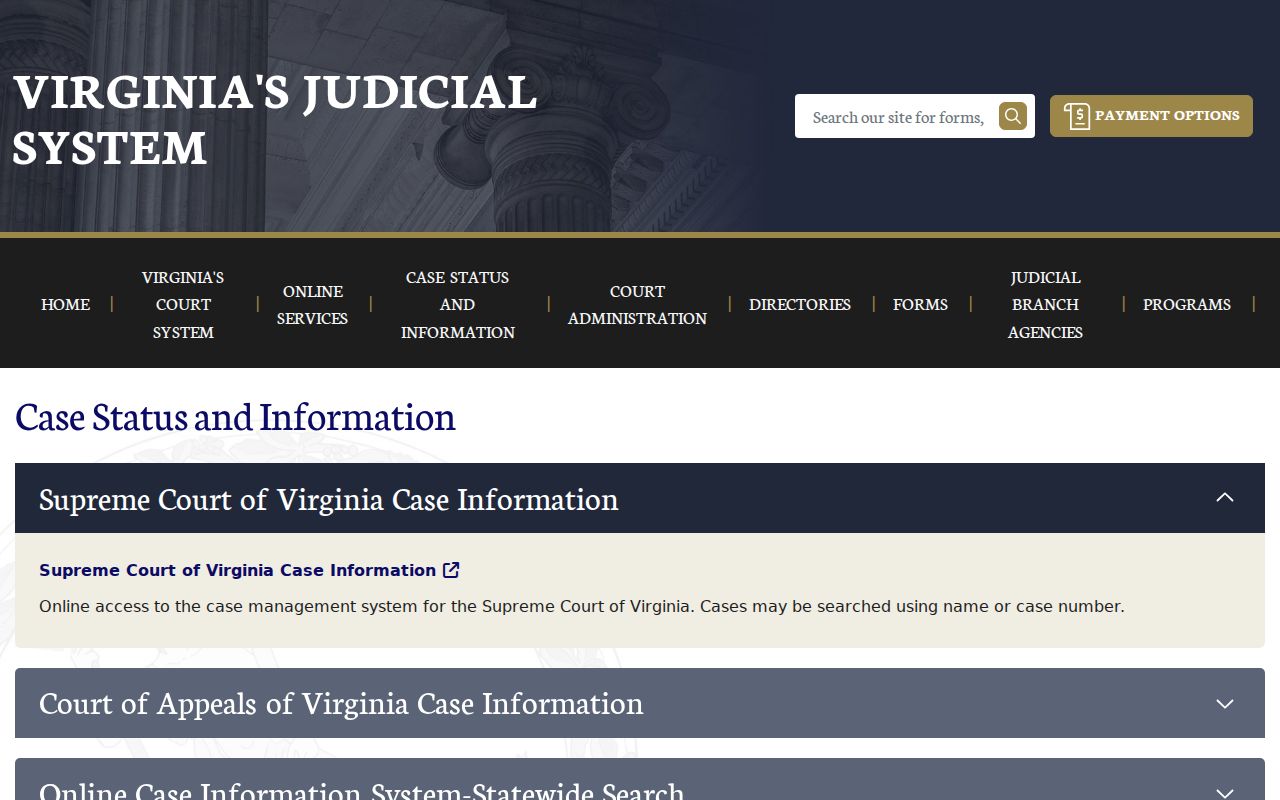
The image reinforces the need to choose the court system first, because the available records and restrictions differ by court.
Chesapeake Resident Records and Vital Events
Virginia Department of Health vital records can confirm an event only within its access rules. Under Virginia Code §32.1-271, birth data becomes public after 100 years, while death, marriage, and divorce data become public after 25 years. A public index is not the same thing as a certified certificate. For a recent event, eligibility, relationship, identification, and the application process matter.
VDH says its current online application can take five business days for a complete request, while a complete mail request is listed at eight business days. The stated search or certificate fee is $15, even if a certificate is not found. The Chesapeake Circuit Court Clerk separately holds local marriage-license and divorce-file material. Use the custodian that holds the exact record sought, and expect sealed or redacted court material to stay restricted.
Chesapeake Residents Directory Terms
Short record terms keep a search from drifting into unsupported claims. They also explain why an official portal often gives a lead rather than a complete answer.
- Parcel
- A mapped unit of land used for assessment and property administration.
- Index
- A finding aid that points to a record; it may not include the document image.
- Roll
- A list kept for one government purpose, such as assessment or voter registration.
- Criss-cross directory
- A street or house-number section that can lead from an address to a printed household or subscriber entry.
These terms are especially important in Chesapeake because a parcel owner, a tax mailing destination, an old subscriber, and a present occupant can be four different things.
Note: Record date, jurisdiction, and source type should be written down with every useful Chesapeake result.
Historical Chesapeake Residents Directory Shelves
Older Chesapeake households often appear under Norfolk County, South Norfolk, Norfolk, Portsmouth, or a community name because the modern city formed in 1963. The Chesapeake Central Library’s Wallace Memorial History Room, on the second floor, is the local physical starting point. It holds noncirculating local-history and genealogy material through the Norfolk County Historical Society. Ask the Reference Desk if the room is locked because volunteer availability can affect access.
Verified directory leads include a 1921 Hill Directory Company Norfolk and Portsmouth volume with Chesapeake subject coverage and a 1964 regional Norfolk, Portsmouth, Chesapeake, and Virginia Beach telephone directory. The 1921 book is available through FamilySearch Library Books. A printed address can show a household or subscriber at that time, but it is not proof of a current resident.
The Wallace Memorial History Room is pictured below. Its local shelves, newspapers, and guidance can bridge gaps that a modern property portal cannot fill.
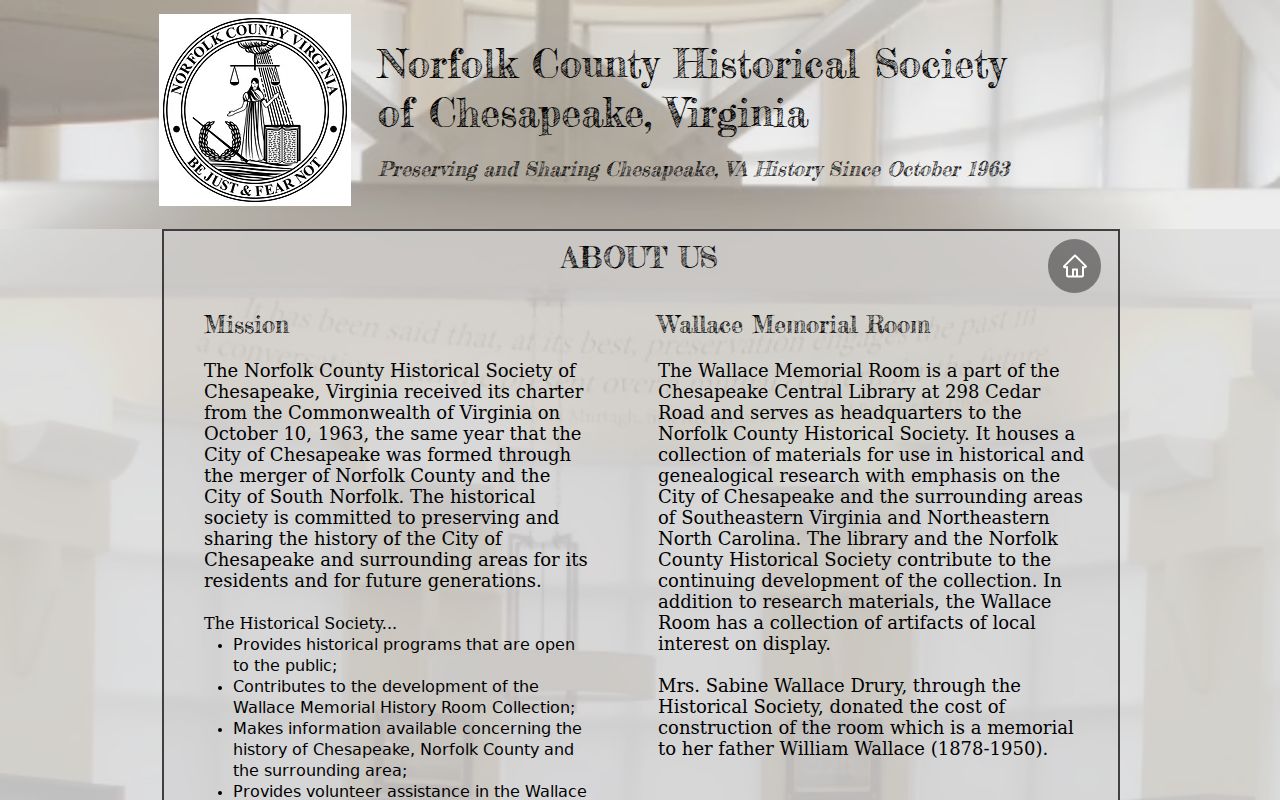
For fuller collection runs, entry reading, and the street-and-house method, use the Chesapeake city directory section of the site.
Chesapeake’s 1963 Records Divide
Chesapeake’s January 1963 consolidation joined Norfolk County and South Norfolk. That history is not a side note. It changes the search label. South Norfolk became a town in 1919 and an independent city in 1950; its gridded streetcar-suburb core developed from the 1890s through the 1930s. A tract or household in an older source may therefore be filed under a predecessor place even when the physical location is in Chesapeake today.
The Library of Virginia’s Norfolk County microfilm catalog carries concrete bridges: early deed-index series, grantor and grantee indexes, map books, and Chesapeake-era index material. A researcher who gets no result under Chesapeake should retain the street, community, legal description, and time period, then search the earlier jurisdiction. This local record story is why a present city name cannot be pushed backward without checking the date.
Note: South Norfolk, Deep Creek, Western Branch, Great Bridge, Greenbrier, Indian River, Hickory, and other community names can be stronger historic search labels than a modern postal label.
Chesapeake Residents Directory Fallbacks
A no-result online search is not always a dead end. The Clerk counter can supply a record or explain its copy procedure. The Wallace Room and Library of Virginia can supply directories, microfilm, newspapers, maps, and predecessor records. Virginia FOIA gives a route for focused non-exempt public records requests. Under §2.2-3704, an agency has five working days to provide access, cite a withholding, seek permitted extra time, or make another authorized response. Charges are actual costs, and a deposit can be requested above $200.
Some information must remain unavailable. Protected addresses, sealed cases, juvenile matters, restricted vital records, utility accounts, and unlisted household details are not gaps a better keyword can solve. For a Clerk-related safety step, Chesapeake offers a free Property Notification service that emails registered owners when documents are recorded under selected names. It gives an early warning, but does not prevent fraud.
The Circuit Court Clerk page describes this recorded-document service. Use the official Clerk contact to check any unexpected recording or deed-copy solicitation.
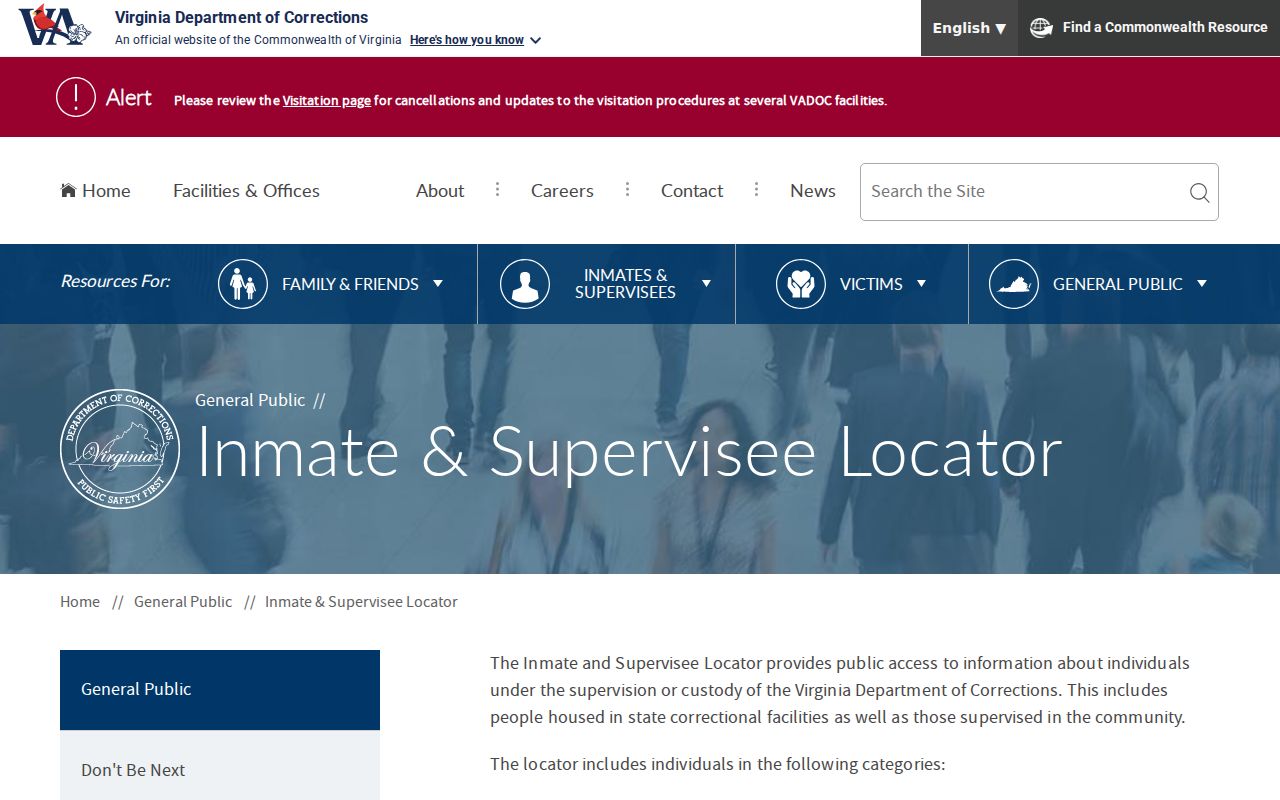
State locator tools can have narrow, source-specific purposes. The visible filters do not turn a limited official system into a general resident roll.
Chesapeake Official License Cross-Checks
When a name is connected to a regulated trade or business, use a dated official filing as a cross-check, not as proof of a private residence. The Virginia State Corporation Commission’s CIS can show entity name, identification number, type, address, formation date, status, registered agent, and filings. Virginia DPOR’s free service accepts a name, license number, address, or license type, but it warns that its display can lag the agency’s physical records.
The Virginia DPOR License Lookup is shown below. Pair any result with the entity or agency record date, and do not assume a listed agent, licensee, or address is a current household match.
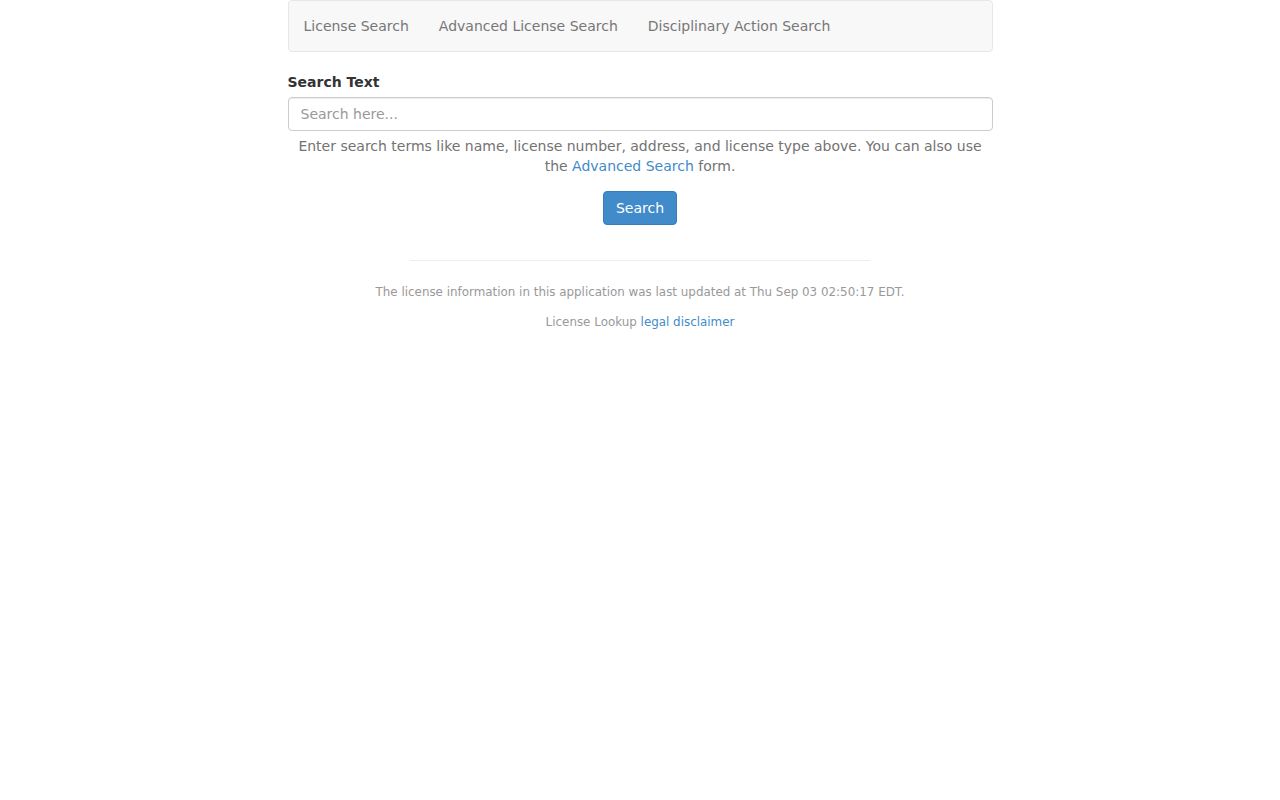
A license search is most useful when it confirms an identity detail already supported by a Chesapeake parcel, court, deed, or historical record.